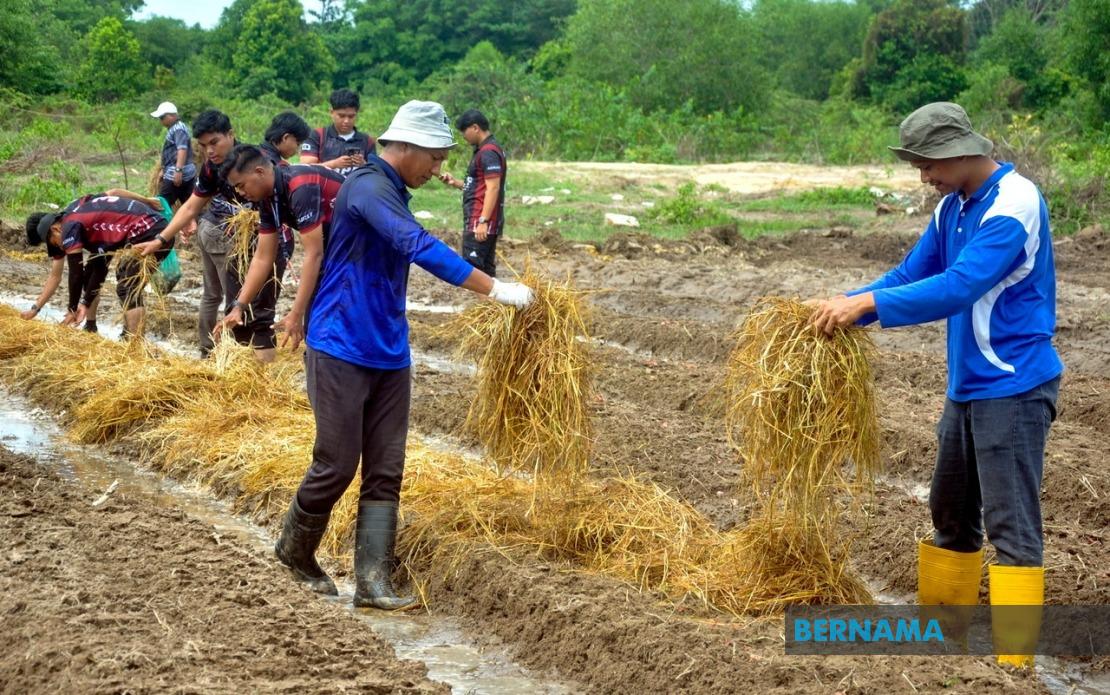
Malaysia's vocational training system for agriculture is gaining traction, with employment outcomes for graduates improving substantially over the past six years, yet the sector remains challenged by its inability to compete with other industries for young talent. The Ministry of Agriculture and Food Security announced on July 23 that placement rates for Technical and Vocational Education and Training (TVET) graduates in agricultural fields have climbed to 76 per cent in 2024, a significant leap from the 61 per cent achieved in 2018. The data emerges from a comprehensive study conducted jointly with PNB Research Institute, examining the career trajectories and economic outcomes of agricultural TVET alumni across Malaysia.
Despite the positive momentum, agricultural TVET lags considerably behind the national TVET employment average of 95 per cent, indicating that even within the vocational system, agricultural pathways remain less attractive than technical fields such as manufacturing, construction, or automotive trades. This disparity underscores a persistent challenge: while Malaysia has invested in agricultural education infrastructure, market forces and wage expectations continue to steer graduates toward non-agricultural sectors. The findings reveal a sector struggling with structural perception issues rather than mere skill gaps or programme quality deficiencies.
The research team analysed comprehensive employment and income data spanning multiple years, uncovering an important economic incentive that policymakers hope will drive recruitment. Agricultural TVET graduates who entered the farming sector discovered they earned approximately RM100 monthly more than counterparts employed outside agriculture, a modest but meaningful premium that demonstrates the sector's competitive wage positioning. More significantly, agro-entrepreneurs—TVET graduates who established their own agricultural ventures—achieved substantially higher incomes than those operating non-agricultural businesses, suggesting that self-employment in farming offers genuine wealth-creation opportunities for capable entrepreneurs.
These income findings carry particular relevance for Southeast Asian economies grappling with agricultural modernisation. Malaysia's experience suggests that when farmers adopt more productive practices and embrace entrepreneurial models, financial returns can match or exceed urban employment. This carries implications for Thailand, Vietnam, and Indonesia, where governments equally struggle to retain rural talent in farming sectors facing demographic and generational crises.
However, income advantages alone have failed to arrest the sector's fundamental crisis: ageing. The study documented that one in two farm workers is now aged 40 and above, a demographic crisis decades in the making. Youth participation in agriculture has declined steadily over the past decade, reflecting broader patterns across Asia where younger generations perceive farming as backward, unstable, or unrewarding regardless of actual economic returns. This perception gap—where real opportunities exist but young people avoid the sector—represents perhaps the most intractable challenge confronting Malaysian agricultural policy.
Geographic distribution of agricultural TVET graduates reveals another concerning imbalance. Sabah accounts for 15 per cent of participating graduates, followed by Kedah with 14 per cent and Sarawak with 13 per cent. These regions, primarily in East Malaysia and the northern peninsula, concentrate graduate engagement, while major agricultural states such as Johor, Pahang, and Perak remain vastly underutilised. This mismatch between graduate distribution and agricultural potential suggests that TVET programmes have not adequately penetrated major agricultural production zones, leaving substantial regional economies without sufficient skilled workforce development pipelines.
The ministry has outlined six strategic policy directions intended to address these gaps and accelerate sectoral transformation. These include customising programme curricula to match each state's specific agricultural strengths rather than deploying one-size-fits-all models; shifting success metrics away from mere enrolment toward agricultural outcomes; actively reducing entrepreneurial risks through support mechanisms such as financing and technical assistance; integrating business and market skills throughout vocational curricula rather than treating them as supplementary; expanding student exposure across the entire agricultural value chain from production through processing to distribution; and deepening collaboration between educational institutions and agricultural industries.
These directions reflect considerable sophistication in policy thinking, moving beyond simple supply-side interventions toward comprehensive ecosystem reform. Rather than merely creating more agricultural TVET places, the ministry recognises the need to reshape how students experience agriculture, perceive its career possibilities, and develop practical entrepreneurial capabilities. The emphasis on value-chain integration particularly addresses a critical gap: many young people understand only the physically demanding farm production component, remaining unaware of higher-value opportunities in processing, marketing, logistics, and agricultural technology.
The study's presentation to the National Technical and Vocational Education and Training Council, chaired by Deputy Prime Minister Datuk Seri Dr Ahmad Zahid Hamidi, signals that agricultural workforce development has attained high-level political priority. The alignment with the National Food Security Policy 2030 and the National Agro-Food Policy 2021-2030 (DAN 2.0) demonstrates that policymakers understand agricultural education as critical infrastructure for achieving food sovereignty, not merely as a human resource development programme.
For Malaysia specifically, the agricultural TVET sector faces a window of opportunity. Current 76 per cent employment rates and income advantages provide genuine selling points for recruitment campaigns targeting secondary school leavers. However, closing the 19-percentage-point gap with the national TVET average requires not just better marketing but structural reforms that modernise how agriculture is taught, practised, and perceived by young Malaysians. The coming years will test whether policy initiatives can overcome generational preferences that have steered talent toward urban sectors for two decades.
The MoU between the agriculture ministry and PNB Research Institute, signed September 9, 2025, institutionalises ongoing research and engagement, suggesting commitment to evidence-based policy development. This collaborative approach contrasts with sectors that implement programmes without systematic outcome tracking, positioning agricultural TVET as a testbed for what effective vocational education can achieve when paired with rigorous evaluation and stakeholder engagement.

