The African Union's Peace and Security Council has made clear its position on Sudan's ongoing crisis, publicly rejecting any foreign powers attempting to shape the nation's trajectory or establish rival power structures that could fragment the country further. This stance emerged during diplomatic talks held at the presidential palace in Khartoum on Sunday, where Sudan's Sovereignty Council Chairman Abdel Fattah al-Burhan received a delegation led by Algerian diplomat Mohamed Khaled, who currently chairs the AU council.
Khaled characterised the engagement as productive and meaningful, indicating that both parties exchanged views across multiple dimensions of the Sudanese predicament. The visiting delegation underscored that international meddling in Sudanese affairs acts as an accelerant to the conflict, intensifying grievances and complicating efforts to find common ground among warring factions. The council's rejection of parallel governmental structures reflects concern that fragmented authority could make governance impossible and entrench divisions that might take generations to heal.
The AU's prescription for Sudan centres on inclusive dialogue, national reconciliation, and a comprehensive political settlement that genuinely incorporates the demands and hopes of ordinary Sudanese citizens. This roadmap represents a departure from military-centric solutions, suggesting instead that lasting stability requires broader political consensus and the eventual transition to constitutional governance through transparent electoral processes. Khaled advocated for the transitional process to become more encompassing, drawing in political actors across the spectrum rather than concentrating power among a narrow elite.
Another positive development highlighted during the visit concerned the government's renewed efforts to operate from Khartoum, reasserting state authority in the capital and reactivating institutions responsible for delivering basic services. This symbolic return to capital-based governance is viewed as essential to demonstrating that the state can function and care for its population, a critical confidence-building measure when millions lack access to clean water, healthcare, and food security. The AU characterised this move as pivotal for rebuilding public trust in institutions that have been weakened by months of fighting.
Prime Minister Kamil Idris seized the opportunity to announce that domestic dialogue between Sudanese stakeholders would commence imminently. Such talks could prove instrumental in establishing frameworks for power-sharing, determining the military's future role, and addressing grievances that ignited the current violence. The willingness of leadership to engage in such conversations suggests at least rhetorical commitment to political solutions, though moving from statements to substantive negotiations remains a significant challenge.
Sudan's catastrophe began in April 2023 when tensions between the formal military establishment and the Rapid Support Forces, a powerful paramilitary organisation, erupted into armed conflict. The trigger involved a planned integration of the RSF into the regular armed forces—a contentious proposal that the paramilitaries resisted, fearing subordination and loss of autonomy. What commenced as an institutional dispute has metastasised into a devastating nationwide war affecting civilians far removed from military calculations.
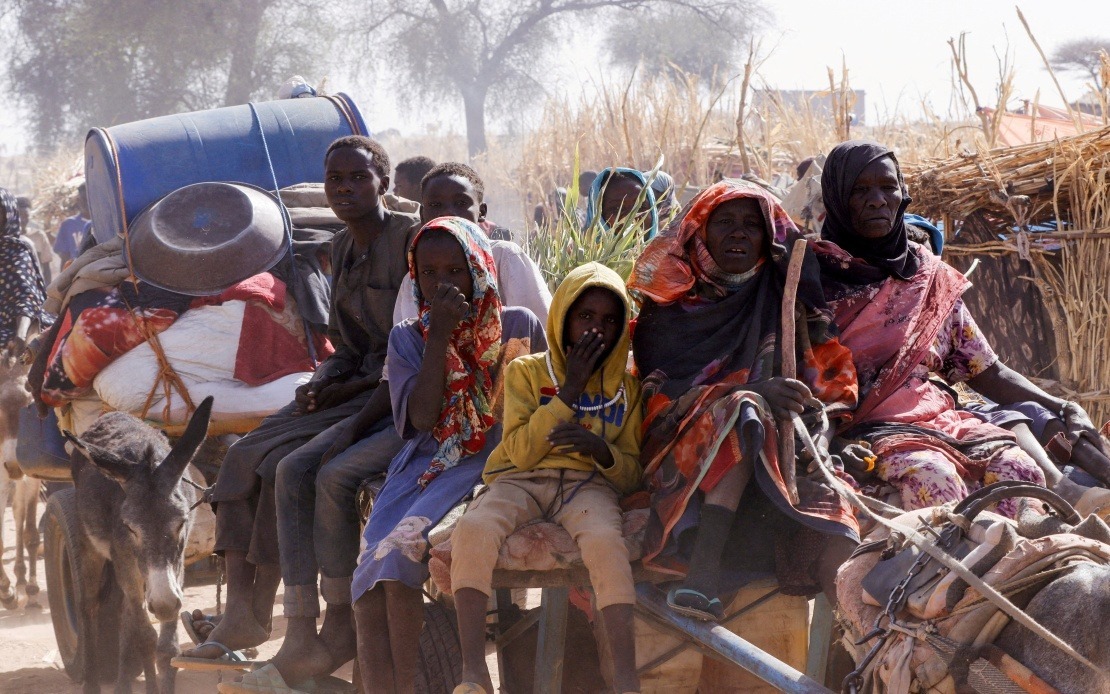
The human toll has been staggering and continues to mount. Credible estimates place deaths at tens of thousands, though some analysts suggest the true figure may exceed reported numbers due to limited access for verification. The displacement crisis has reached apocalyptic proportions, with approximately thirteen million Sudanese driven from their homes—a number representing roughly thirty percent of the population. These individuals face acute vulnerability to disease, malnutrition, and exploitation, adding layers of humanitarian catastrophe atop the direct violence.
For regional observers including Malaysia and fellow Southeast Asian nations, Sudan's trajectory carries broader implications. The conflict underscores how institutional disputes within security forces can rapidly destabilise entire nations, a cautionary tale for militaries in developing democracies. Additionally, the involvement of foreign actors seeking to influence outcomes raises questions about respect for national sovereignty—a principle deeply valued in the Association of Southeast Asian Nations and enshrined in Malaysian foreign policy doctrine.
The AU's emphasis on rejecting parallel structures reflects awareness that fragmentation tends to beget further fragmentation. When multiple entities claim legitimate authority, the resulting governance vacuum invites warlordism, state collapse, and permanent insecurity. Regional organisations across Africa and Asia share an interest in preserving functional states that can provide security and services rather than allowing territories to devolve into zones of lawlessness.
The pathway forward outlined by the AU—combining non-interference, inclusive dialogue, and constitutional transition—aligns with principles advocated by the United Nations and regional blocs. However, translating these prescriptions into practice requires buy-in from military leaders, political parties, armed groups, and civil society—constituencies with divergent interests and historical suspicions. The announcement of forthcoming Sudanese-Sudanese dialogue therefore represents a necessary but insufficient condition for peace.
Movements toward governance from Khartoum and dialogical approaches may indicate that some stakeholders recognise the unsustainability of indefinite conflict. Resource exhaustion, growing international pressure, and the mounting humanitarian costs create incentives for negotiated settlement rather than military victory. Whether these tactical calculations translate into genuine commitment to power-sharing and constitutional democracy remains the critical unknown.

