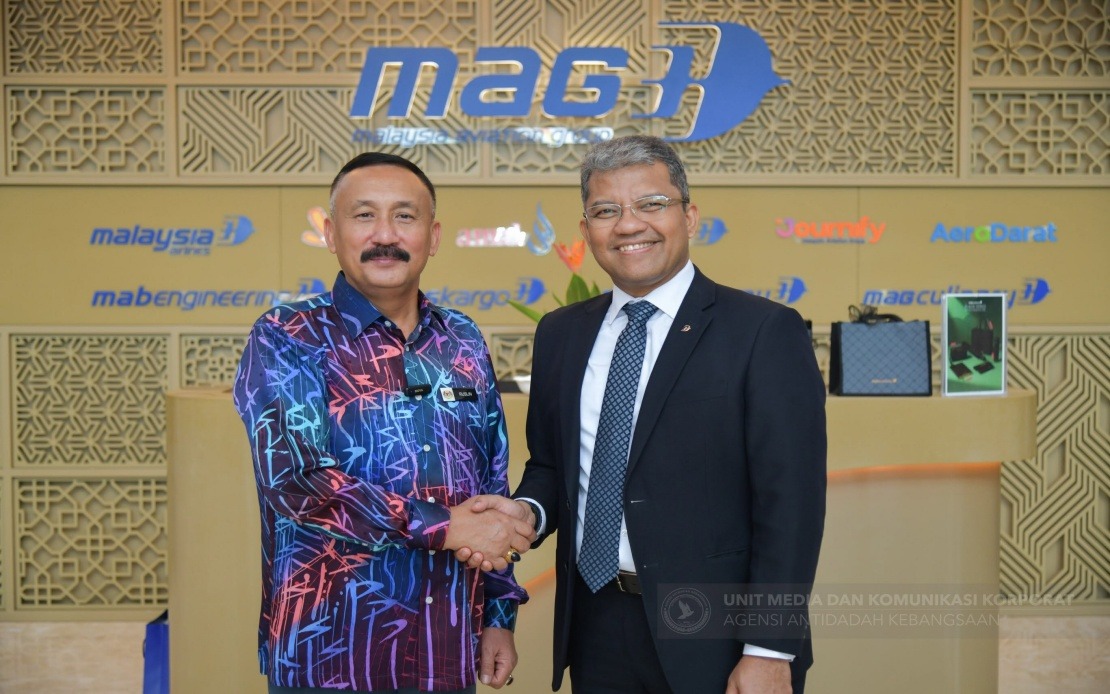
The National Anti-Drugs Agency (AADK) and Malaysia Aviation Group (MAG) have formally committed to deepening their collaboration in tackling drug abuse, marking a significant expansion of anti-narcotics efforts beyond traditional enforcement into the commercial aviation sector. The partnership, formalised through a new memorandum of understanding, reflects growing recognition that drug prevention must extend across all critical industries where public safety depends on employee vigilance and sobriety.
AAAK director-general Datuk Ruslin Jusoh underscored the strategic importance of the alliance during a courtesy visit to MAG chief executive officer Captain Nasaruddin A Bakar at the company's Sepang headquarters. The meeting centred on designing collaborative frameworks that would simultaneously strengthen AADK's institutional capacity and leverage MAG's operational infrastructure to amplify drug awareness campaigns across Malaysia's aviation industry. This approach represents a shift towards sector-specific interventions tailored to the unique risks and responsibilities of air transport.
The cooperation agreement specifically targets prevention, eradication, and public education initiatives aimed at eliminating substance abuse within the MAG workforce. By extending anti-drug programmes into the airline operational environment, both organisations acknowledge that aviation employees occupy a critical safety position where drug impairment could endanger thousands of passengers and crew members daily. This recognition aligns Malaysia with international aviation safety standards, where many regulatory bodies mandate robust substance abuse prevention protocols.
A cornerstone of the partnership involves implementing the Drug-Free Workplace (TEKAD) initiative across MAG facilities and premises. This programme establishes comprehensive frameworks for drug screening, employee education, and rehabilitation support, creating institutional mechanisms to identify and assist staff members struggling with substance abuse. The TEKAD initiative extends beyond punitive measures to encompass counselling and recovery pathways, reflecting contemporary understanding that addiction requires medical intervention rather than criminalisation alone.
Ruslin emphasised that workplace drug prevention constitutes a critical safety measure essential for maintaining flight operations integrity. Aviation represents one of Malaysia's most regulated industries, where operational decisions directly affect national economic interests and international reputation. Maintaining a drug-free workforce ensures that pilots, engineers, and ground staff operate at optimal cognitive capacity, reducing human error that could precipitate catastrophic incidents. This safety imperative distinguishes aviation from many other sectors where substance abuse poses primarily occupational rather than existential risks.
The collaboration carries implications extending beyond MAG employees to Malaysia's broader aviation ecosystem. Malaysia Airlines, as MAG's flagship carrier, operates as a national symbol and generates significant international visibility. Should the airline successfully implement comprehensive drug prevention programmes, the model could cascade across the sector, influencing regional carriers and establishing best practice standards. This demonstration effect amplifies the partnership's impact far beyond the immediate organisational boundaries.
For AADK, the cooperation represents strategic institutional evolution. Traditionally focused on enforcement and public campaigns, the agency now engages directly with major employers to embed prevention infrastructure within corporate structures. This partnership model enables AADK to reach specific workforce populations through employer-sponsored programmes, potentially achieving greater effectiveness than universal public campaigns. The arrangement also enhances AADK's relevance to private sector stakeholders who increasingly view drug prevention as integral to corporate responsibility and operational resilience.
The partnership addresses a persistent gap in Malaysia's drug control architecture. While law enforcement agencies target drug trafficking and consumption, fewer initiatives directly engage major employers in creating protective workplace environments. Aviation sector involvement gains particular significance given Malaysia's aspiration to position itself as a regional aviation hub. Maintaining highest safety and professionalism standards becomes essential for attracting international partnerships and passenger confidence.
Beyond institutional arrangements, the cooperation signals evolving understanding of substance abuse as a workplace health issue demanding multi-stakeholder responses. By involving both government agencies and private corporations, the partnership distributes responsibilities according to respective comparative advantages. AADK contributes regulatory expertise and prevention programme design, while MAG contributes operational access, employee reach capacity, and implementation infrastructure. This collaborative division of labour maximises resource efficiency while ensuring comprehensive coverage.
The agreement also reflects demographic realities within Malaysia's workforce. As younger employees increasingly populate aviation industry roles, engagement with anti-drug initiatives becomes particularly consequential for establishing professional norms and workplace culture. Early intervention and education during formative career stages may prove more effective than remedial approaches targeting established habits.
Regional security considerations further contextualise the partnership. Southeast Asia confronts persistent drug trafficking challenges, with aviation infrastructure occasionally exploited for substance movement. By maintaining stringent workplace drug prevention protocols, MAG reduces operational vulnerabilities that transnational criminal networks might otherwise exploit. This security dimension reinforces the practical necessity of the partnership beyond conventional occupational health rationales.
The memorandum of understanding represents initial formalisation rather than implementation endpoint. Both organisations now face the substantive challenge of translating commitment into operational reality across dispersed MAG facilities and thousands of employees. Success will require sustained resource allocation, comprehensive staff training, and cultural shifts normalising drug testing and prevention education within organisational contexts historically resistant to such measures.
Looking forward, the AADK-MAG partnership establishes a template potentially applicable to other safety-critical industries including transportation, energy, and telecommunications. Should the collaboration demonstrably reduce substance abuse prevalence while enhancing workplace safety metrics, policymakers may encourage similar initiatives across sectors where employee performance directly affects public welfare. This foundational partnership thus carries significance extending well beyond aviation, potentially reshaping how Malaysia addresses occupational drug prevention systematically.

