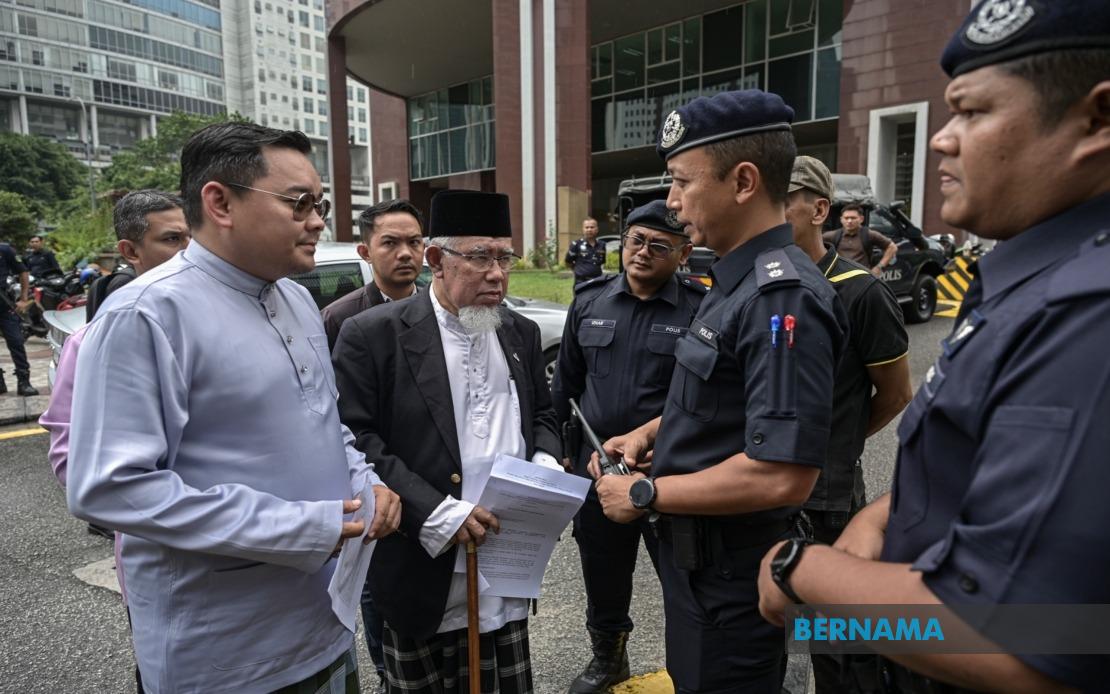
A coalition of fifty-eight Malaysian non-governmental organisations delivered a strongly-worded protest memorandum to the US Embassy in Kuala Lumpur on July 24, signalling unified domestic opposition to external pressure regarding the nation's approach to Israeli citizens. The handover took place at 2.45 pm, with representatives from prominent civil society groups including the Malaysian Consultative Council of Islamic Organisations (MAPIM), Malaysian Islamic Youth Movement (ABIM), and Malaysian Youth Council (MBM) present to underscore the breadth of organisational backing for Malaysia's sovereign position.
The protest was triggered by a recent intervention from eight United States lawmakers, who had urged the American government to suspend security assistance to Malaysia, specifically targeting the International Military Education and Training (IMET) programme, unless the country rescinded its policy restricting entry to Israeli citizens within a fifteen-day timeframe. This ultimatum represented an unusually direct form of Congressional pressure on Malaysian domestic policy, linking defence cooperation to what the US legislators characterised as discriminatory practices.
MAPIM president Mohd Azmi Abdul Hamid articulated the core grievance at a subsequent press conference, asserting that Malaysia would not compromise its foundational sovereignty or policy-making autonomy in response to external demands. He posed a fundamental question about the legitimacy of foreign governments dictating national policy decisions, particularly when Malaysia has maintained a longstanding and consistent position of non-recognition of Israel, a stance that has been institutionalised within the country's passport regulations prohibiting travel to that destination. This framing of the issue moved beyond the immediate dispute to encompass broader principles about national self-determination and the right of elected governments to establish immigration and foreign policy without interference.
The accusation of hypocrisy loomed large in the NGOs' formal objection. Mohd Azmi highlighted what he characterised as a double standard, noting that the United States itself has historically imposed entry restrictions on citizens of numerous countries and regions based on what Washington has determined to be legitimate national security grounds. The contrast between America's assertion of sovereign prerogative in controlling its own borders and its challenge to Malaysia's equivalent authority proved a potent rhetorical point for the coalition defending their government's position.
In a coordinated show of domestic support, the participating NGOs had previously submitted a separate memorandum to Prime Minister Datuk Seri Anwar Ibrahim expressing their collective backing for the government's uncompromising stance. This two-pronged approach—simultaneously defending the government to the Prime Minister and protesting to foreign diplomats—underscored the degree to which this issue had mobilised Malaysian civil society organisations across the religious and youth sectors.
ABIM president Ahmad Fahmi Mohd Samsudin directly rebutted characterisations by the eight Democratic Party lawmakers that Malaysia's policy constituted anti-Semitism. He reframed the country's position as a principled opposition to what he described as oppression and the ongoing humanitarian catastrophe in Gaza, situating Malaysia's stance within a broader humanitarian and anti-colonial narrative rather than accepting the framing of ethnic or religious discrimination. This counter-narrative attempted to shift the conversation from identity-based exclusion to geopolitical and human rights concerns.
The immediate trigger for the Congressional intervention was Malaysia's decision to rapidly deport Israeli citizens who were allegedly residing in the country under dual citizenship status. The pace and apparent coordination of these deportations caught the attention of Washington, prompting the lawmakers' letter to Secretary of State Marco Rubio. The timing and manner of the deportations appeared designed to demonstrate Malaysia's commitment to its policy, though they simultaneously invited the external pressure that has now materialised.
For Malaysian observers, this episode illuminates the persistent tension between small and medium powers asserting independent foreign policies and the expectation from larger powers that economic and security relationships should translate into policy alignment. The IMET programme, while perhaps modest in financial terms, represents a significant channel through which the US cultivates military-to-military relationships and influence across Southeast Asia. The threat to suspend such assistance carries real weight for a country's defence establishment and security partnerships.
The show of unity among fifty-eight organisations spanning Islamic youth movements, consultative councils, and broader youth groups suggests that Malaysia's Palestine-related policies maintain broad grassroots support, at least among organised civil society. This domestic consensus may provide the government with political cover to resist the American pressure without facing domestic accusations of capitulating to either Washington or pressure groups.
The episode also reflects broader regional sensitivities. Southeast Asia has historically maintained careful distance from the Israeli-Palestinian conflict, with Malaysia being particularly vocal in its support for Palestinian causes. For Malaysia to reverse course would represent not merely a technical policy change but a significant reorientation of its regional and international positioning, which likely explains why both the government and civil society have chosen to resist rather than accommodate.
Longer term, this confrontation raises questions about the sustainability of conditional security relationships in an era when smaller nations increasingly assert independent foreign policies aligned with domestic constituencies' preferences. The Malaysian government's apparent willingness to absorb potential costs to its security relationship with the United States in defence of this policy suggests that on certain issues—particularly those touching on religious identity and postcolonial principles—there are limits to the pressure that even powerful nations can effectively exert.

