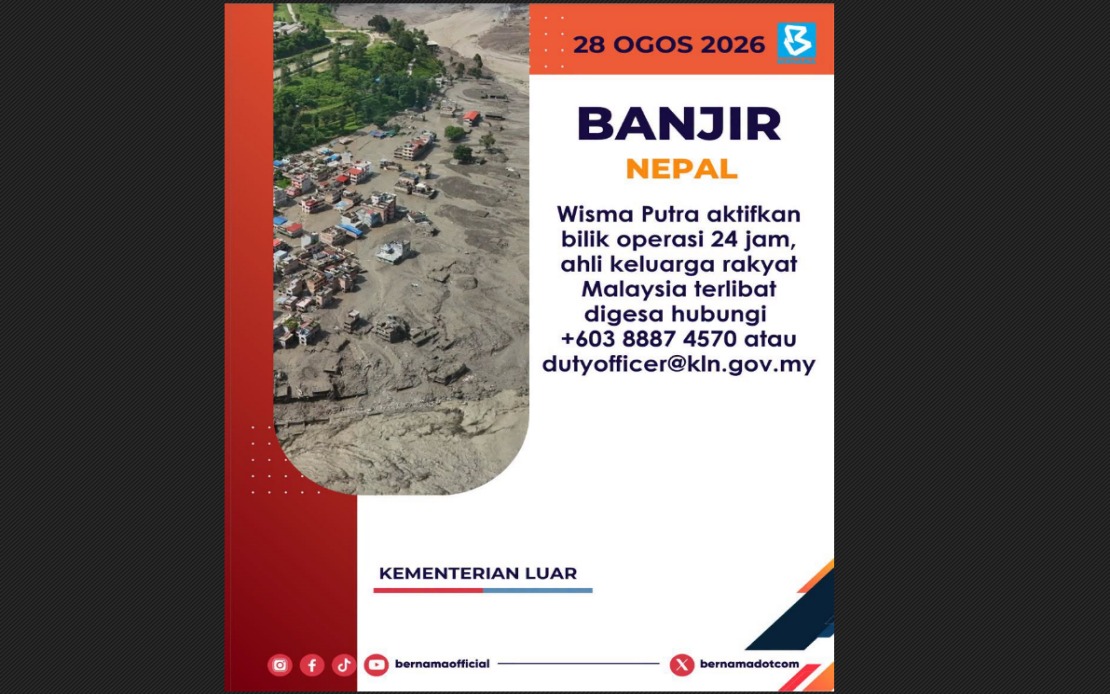
Nepal's Rasuwa district has descended into humanitarian crisis following catastrophic floods that struck Wednesday morning, and Malaysia's foreign ministry is mounting an intensive search operation to locate 57 citizens unaccounted for in the disaster zone. The Foreign Ministry, known locally as Wisma Putra, confirmed the missing count based on reports from families, colleagues and employers received through Friday evening, triggering the activation of a dedicated Operations Room in Putrajaya running non-stop to coordinate rescue efforts and provide real-time support to affected Malaysians and their anxious relatives.
The scale of devastation across Nepal has proven staggering, with confirmed fatalities exceeding 400 people and more than 800 individuals, predominantly foreign tourists caught unaware by the sudden disaster, still unaccounted for according to Nepalese authorities. Infrastructure across the affected region has suffered severe damage, with road networks largely impassable and communication systems severely compromised, creating formidable obstacles for rescue teams attempting to reach survivors stranded in remote mountain communities. Local rescue operations have yielded 31 foreign nationals so far, though Wisma Putra noted it has not yet confirmed whether any Malaysian citizens were among those rescued.
Diplomatic missions operating across South Asia have begun systematic cross-verification procedures with Nepalese government agencies, working alongside Nepal's Foreign Ministry Emergency Response Team and the Nepal Tourism Board to establish clearer details about Malaysian nationals in the region. This collaborative approach reflects the complexity of accounting for citizens who may have been trekking through remote areas or exploring less-populated regions when the disaster struck. The ministry has acknowledged that some Malaysians may have accessed the affected zones via entry points through China and India, indicating the need for expanded search parameters beyond conventional tourist corridors.
For Malaysian families desperately seeking information about loved ones, Wisma Putra has established multiple communication channels operating continuously. The Operations Room telephone line at +603 8887 4570 remains staffed around the clock, while email contacts at [email protected] provide an alternative communication method for those providing initial reports or updates. Families can also directly contact Malaysia's Embassy in Kathmandu through [email protected], with concurrent notification to the Operations Room ensuring all information flows to coordinating centres. The ministry has specifically urged any Malaysians whose relatives were registered through e-Konsular systems to verify and update their contact details, as this information proves critical for verification processes.
Wisma Putra's public advisories carry particular significance for the wider Malaysian community currently travelling or residing across the Nepal region. The Foreign Ministry has issued formal guidance encouraging all Malaysian citizens in or near flood-affected areas to prioritise immediate personal safety, avoid attempting unauthorized rescue or recovery missions, and comply strictly with instructions from local Nepalese authorities who understand ground conditions far better than international visitors. This messaging serves dual purposes: preventing additional casualties among Malaysian nationals who might attempt to reach friends or family independently, while simultaneously easing the burden on already-stretched Nepalese rescue services.
The disaster underscores the vulnerabilities that international travellers face in mountainous regions prone to sudden natural catastrophes. Nepal's geography, while spectacularly beautiful and attracting trekkers worldwide, creates particularly hazardous conditions during severe weather events. Rivers swell with frightening speed, landslides cut off communities entirely, and communication breakdowns mean information about unfolding emergencies travels slowly. For Malaysian tourists, particularly those undertaking independent trekking expeditions in remote districts like Rasuwa, the disaster represents a sobering reminder of nature's unpredictability and the importance of maintaining emergency communication systems and travel registrations.
The role of helicopter operations has become central to the ongoing emergency response, with aircraft proving essential for evacuating seriously injured survivors to major medical facilities in Kathmandu and delivering supplies to isolated communities. Minor injuries are being treated through improvised medical camps established within accessible sections of flood-affected areas, a pragmatic approach given the destruction of conventional healthcare infrastructure. The coordination challenges are immense, involving multiple agencies across different jurisdictions, communication systems rendered unreliable by the disaster, and the sheer volume of people requiring assistance simultaneously.
Malaysia's diplomatic response reflects broader Southeast Asian concern about citizens caught in international crises. Similar emergency protocols have been activated during previous disasters affecting the region, establishing institutional memory and tested procedures for rapid information gathering and family liaison. Wisma Putra's establishment of 24-hour operations demonstrates serious commitment to the issue, avoiding the perception that Malaysian citizens abroad receive lower-priority attention than domestic emergencies. This posture carries particular importance for a nation with substantial diaspora communities and large numbers of regular international travellers.
The situation continues evolving as rescue operations progress and communication systems gradually restore functionality. Additional information about casualties and missing persons will likely emerge as Nepalese authorities conduct systematic area surveys and survivors reach recovery centres. For Malaysian families in holding patterns of uncertainty, each update carries enormous weight, alternating between hope that their relatives have survived and dread that grim news may arrive. The Operations Room's continuous operation acknowledges this emotional reality, ensuring that no family inquiry goes unanswered and that information flows as transparently as circumstances permit.

