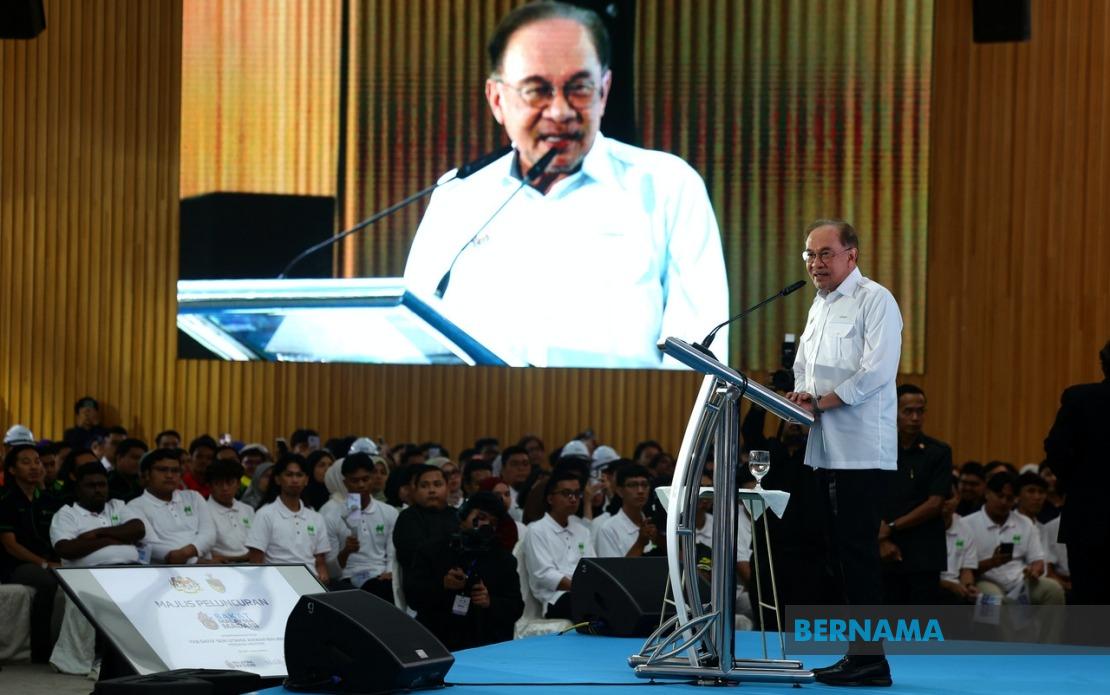
Prime Minister Datuk Seri Anwar Ibrahim has inaugurated Bakat MADANI, a sweeping national talent development programme designed to equip 25,000 Malaysians with marketable skills and career pathways. Launched in Seremban on June 29, the initiative represents a collaborative effort between the public and private sectors, harnessing the resources of government-linked investment companies (GLICs), government-linked companies (GLCs), and the national oil corporation Petronas to reshape Malaysia's approach to workforce development and social mobility.
The scale of this initiative underscores the government's recognition of a critical gap in Malaysia's talent pipeline. As the nation seeks to transition toward higher-value economic sectors, the traditional pathways for young people entering the workforce have proven insufficient. Bakat MADANI addresses this by creating an ecosystem where skills training, job placement, and career advancement opportunities are woven together across multiple industries and institutions. The programme prioritises sectors identified as crucial for Malaysia's long-term economic competitiveness, particularly semiconductors, renewable energy, the digital economy, and advanced manufacturing—areas where regional and global demand for skilled workers continues to surge.
Anwar emphasised that the success of Bakat MADANI depends fundamentally on the genuine commitment of participating corporations. He cautioned young beneficiaries to recognise that their opportunities rest on the investment and operational diligence of these organisations, not government funding alone. This framing highlights an important shift in how Malaysia approaches public-private partnerships for skills development: the burden of implementation rests significantly on corporate shoulders, requiring them to maintain rigorous standards and authentic commitment to meaningful employment outcomes.
Finance Minister II Datuk Seri Amir Hamzah Azizan elaborated on the three foundational pillars that structure Bakat MADANI. The first focuses on strengthening employability and career progression within the GLIC, GLC, and Petronas ecosystem itself, creating internal pathways for talented individuals to advance through some of Malaysia's largest and most influential organisations. The second expands horizons beyond these anchor institutions by connecting graduates to quality job placements across strategic sectors throughout the economy. The third component empowers Technical and Vocational Education and Training (TVET) institutions, recognising that these pathways have historically been underfunded and undervalued compared to university education, despite offering immediate pathways to employment.
The emphasis on connecting talent with genuine opportunities reflects a pragmatic understanding of Malaysia's employment challenges. Many young Malaysians acquire qualifications without translating them into stable, well-compensated work. Bakat MADANI attempts to close this gap by designing integrated pathways from skills acquisition directly into employment sectors actively seeking workers. Amir Hamzah articulated this philosophy clearly: the initiative's core mission is to forge meaningful links between the skills being developed and the real vacancies that exist in Malaysia's economy. This approach potentially addresses the mismatch that has plagued earlier workforce development efforts, where training was sometimes disconnected from actual market demand.
A significant innovation within the programme involves new tax incentives designed to motivate corporate participation in skills development. These improved incentives expand coverage to include TVET graduates and provide higher minimum allowances for trainees, ensuring that individuals participating in sponsored training programmes receive fair compensation. This financial mechanism recognises that effective talent development requires adequate support for participants; training without livable stipends often forces young people to choose immediate employment over skill-building, perpetuating cycles of underemployment.
The initiative builds upon existing frameworks while substantially expanding their scope and integration. Petronas is transforming its VISTA programme into Vista i-Plus, collaborating with the Malaysian Petroleum Resources Corporation and the Malaysian Oil, Gas & Energy Services Council to create an integrated TVET training model. This consolidated approach brings together resources from specialised institutions including MARA Skills Institutes, National Youth Skills Institutes, Advanced Technology Training Centres, and the Malaysian Construction Academy, creating multiple entry points for young Malaysians across different regions and backgrounds.
Within the broader GLIC and GLC ecosystem, Khazanah Nasional Berhad has mobilised 23 higher education institutions to participate in workforce preparation. This network includes prominent universities such as Universiti Teknologi MARA, Universiti Teknikal Malaysia Melaka, and Universiti Malaysia Sabah, which will coordinate industrial training placements, technical certifications, and exposure to industry requirements. The breadth of this institutional participation suggests that Bakat MADANI is not a peripheral initiative but rather a central plank of Malaysia's human capital strategy, integrating academic institutions with employers to create seamless transitions from education to employment.
For Malaysian readers, the significance of Bakat MADANI extends beyond immediate job creation. The programme addresses a structural weakness in Malaysia's economy: the persistent underutilisation of its young population despite relatively high education levels. Youth unemployment and underemployment remain concerns that depress household incomes, reduce tax revenues, and limit domestic consumption. By systematically connecting skills training to sectors where Malaysia has genuine competitive advantages and global demand, the initiative potentially unlocks economic growth from an internal source—a more resilient and productive workforce.
The programme's focus on high-value sectors carries particular relevance for Southeast Asia's regional positioning. Malaysia competes not just domestically but regionally and globally for talent and investment. Semiconductors and renewable energy are domains where competition from Vietnam, Thailand, and Indonesia intensifies. By equipping 25,000 additional Malaysians with relevant skills in these sectors, the government aims to strengthen Malaysia's capacity to retain foreign investment and develop indigenous capabilities. This regional context often goes unexamined in domestic announcements but fundamentally shapes the stakes of workforce development policy.
Another dimension worth considering is the social mobility implications of Bakat MADANI. By explicitly prioritising skill development and quality job creation, the initiative targets barriers that have historically limited opportunity for lower-income Malaysians. Access to training programmes, career exposure, and placement assistance have traditionally clustered among those with educated parents and professional networks. If Bakat MADANI genuinely democratises these pathways—reaching young people from all backgrounds and regions—it could meaningfully reshape Malaysia's income distribution and reduce intergenerational poverty.
The success metrics for Bakat MADANI will matter enormously. Government initiatives sometimes founder in implementation, with announced targets disconnected from actual participant outcomes. Critical questions include whether the 25,000 beneficiaries represent genuine skill acquisition leading to sustained employment, or whether numbers are inflated through generous counting methodologies. Furthermore, tracking whether Bakat MADANI graduates actually earn competitive wages in their chosen sectors, progress into career advancement, and experience improved living standards will determine whether the initiative lives up to its transformative promise.

