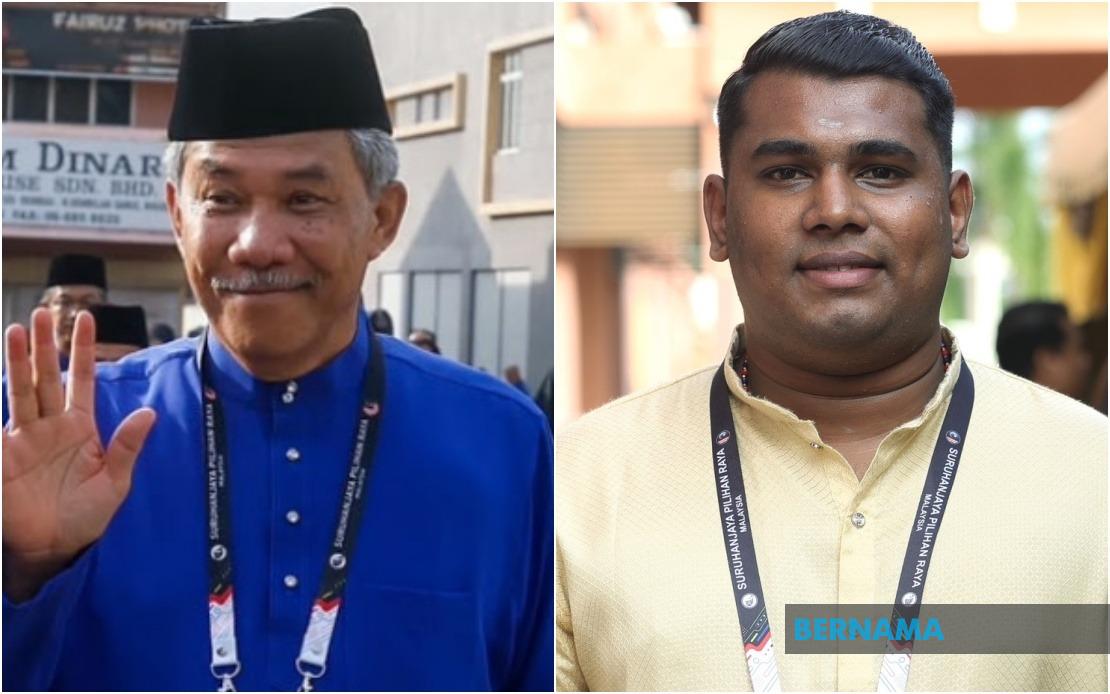
The 16th Negeri Sembilan state election has introduced a significant generational divide among its contenders, with 23-year-old M. Leevineshwaraan of Bersatu establishing a new benchmark as the election's youngest candidate. Standing for the Sri Tanjung state seat, Leevineshwaraan carries the expectation of proving his mettle in a crowded five-cornered contest that will test his political acumen against more established rivals. His candidacy reflects a broader pattern of younger Malaysians stepping into electoral politics, though such opportunities remain comparatively rare across the country's state and federal contests.
Leevineshwaraan's path to the ballot positions him directly against the seat's incumbent, Datuk Dr G. Rajasekaran of Pakatan Harapan, who commands a substantial incumbency advantage. In the previous election cycle, Rajasekaran secured the Sri Tanjung mandate with a comfortable majority of 3,996 votes, a buffer that any challenger must overcome. The presence of three additional candidates in this election fragments the opposition vote, potentially altering the electoral dynamics in ways that favourable demographic shifts or strategic voter consolidation could influence. Within the Port Dickson parliamentary constituency, the Sri Tanjung state seat sits alongside four counterparts, together encompassing 19,590 registered voters whose participation will ultimately determine the outcome.
The youth record previously held in Negeri Sembilan's state elections stood at 25 years old, set by Muhammad Syakir Fitri Sadri during the 15th state polls in 2023 when he stood as an Independent candidate for the Paroi seat. Leevineshwaraan's two-year advantage over this mark signals a subtle shift towards even younger political participation, though the absolute numbers remain modest. The inclusion of such youthful candidates, whatever their electoral fortunes, mirrors global trends of younger citizens demanding representation and voice within political processes. For Malaysian political observers, the phenomenon warrants attention as a barometer of generational engagement and potential shifts in electoral behaviour patterns among younger voters who increasingly question traditional political structures.
At the opposite end of the age spectrum, the election witnesses robust representation from seasoned political figures whose combined decades of experience present a striking contrast to Leevineshwaraan's nascent career. Datuk Seri Mohamad Hasan, serving as deputy chairman of Barisan Nasional, and Pakatan Harapan's Abd Latif A Tambi both entered their seventies and now compete as the election's oldest candidates. Mohamad, defending his Rantau seat within the Rembau parliamentary constituency, commands the resources and organisational backing of the BN machinery. Meanwhile, Abd Latif contests the Gemencheh seat, situated within the Tampin parliamentary area, with PH's backing. Each politician faces relatively straightforward two-way contests that lack the fragmentation visible in other races, a structural advantage that typically accrues to established figures with deep voter recognition.
The Rantau state seat encompasses 34,831 registered voters, representing one of the larger electoral populations within Negeri Sembilan's 36 state constituencies. Gemencheh, by contrast, registers 24,916 eligible voters, a notably smaller base that potentially renders individual campaigns and personal networks more consequential in determining outcomes. The comparison illustrates how Malaysian electoral mathematics vary considerably across constituencies, with some seats requiring candidates to mobilise vastly larger voter cohorts than others. For campaign strategists, such disparities demand tailored approaches, as the density and composition of the electorate fundamentally shape messaging priorities and resource allocation.
Previously, the oldest candidate contesting a Negeri Sembilan state election was Bujang Abu, who stood as an Independent at 72 years old during the 15th state polls. Notably, Bujang will not repeat his candidacy this cycle, having failed to submit documentation required by the Election Commission, a procedural obstacle that underscores the administrative requirements underpinning contemporary electoral contests. His absence, despite his prior participation, demonstrates that even experienced political figures cannot assume automatic clearance for successive campaigns. The administrative infrastructure surrounding elections, while sometimes dismissed as bureaucratic inconvenience, serves important regulatory functions designed to maintain electoral integrity and procedural standards.
Gender representation within the candidate pool presents another dimension of the election's composition, with women comprising nine of the 103 total candidates—a modest proportion that nonetheless reflects gradual progression. Pakatan Harapan leads in fielding women candidates, presenting four of the nine female contenders. This distribution slightly exceeds the previous state election in 2023, when eight women competed among 83 total candidates. While the upward movement appears encouraging on surface examination, the absolute numbers and proportions reveal persistent underrepresentation of women within candidate slates across Malaysian state elections. The stagnation at approximately nine percent female representation suggests that despite rhetorical commitments to gender inclusivity, substantive transformation in candidate selection processes has progressed slowly.
The electoral calendar for the Negeri Sembilan contest establishes clear procedural benchmarks for voters and campaign teams alike. Early voting will commence on July 28, permitting those unable to vote on the primary election day to participate through this alternative mechanism. The main polling day arrives on August 1, providing candidates with a defined period to conclude their campaigns and voters with their final opportunity to cast ballots. This compressed timeline concentrates electoral activities, placing emphasis on efficient campaign operations and voter contact strategies. For political analysts observing Malaysian electoral trends, the state contest serves as a meaningful indicator of broader sentiment ahead of potential federal-level contests.
Negeri Sembilan's state election unfolds within Malaysia's federal democratic architecture, where state contests often function as interim assessments of political momentum and coalition stability. The presence of BN, PH, and Bersatu candidates across constituencies reflects the current tripartite structure dominating Malaysian politics. Bersatu's emergence as a fielding party at state level, as illustrated by Leevineshwaraan's candidacy, represents its ongoing efforts to establish grassroots presence and credibility beyond federal parliamentary representation. For Malaysian political observers, state elections provide crucial data regarding the relative strength of competing coalitions and their capacity to mobilise voters across different demographic categories and geographic regions.
The contest encapsulates broader questions regarding political renewal and the balance between experience and fresh perspectives. While younger candidates like Leevineshwaraan bring contemporary viewpoints and technological fluency to campaigning, established figures like Mohamad and Abd Latif contribute institutional knowledge and voter relationships accumulated across lengthy political careers. Malaysian politics must navigate this generational interface, determining how to incorporate emerging voices whilst retaining institutional continuity and administrative competence. The Negeri Sembilan election, featuring candidates spanning five decades, exemplifies this ongoing negotiation shaping Malaysia's democratic development.

