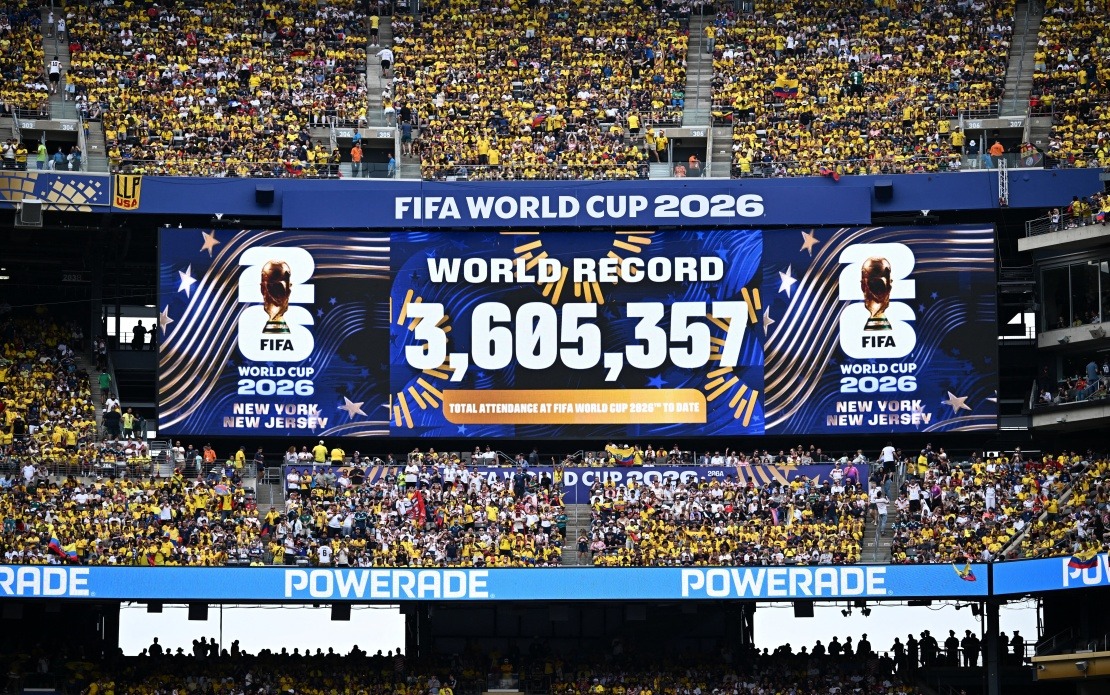
The 2026 FIFA World Cup has etched its name into football history by becoming the most-attended edition of the tournament ever staged. On Thursday in East Rutherford, New Jersey, the competition surpassed the previous attendance benchmark of nearly 3.6 million spectators set in 1994, a record that had stood unchallenged for three decades. The historic moment was celebrated in real time when giant screens inside the stadium displayed the new cumulative attendance figure of 3,605,357, drawing roaring applause from the crowd witnessing Germany face Ecuador.
The significance of this achievement extends beyond mere numbers. The 1994 World Cup, hosted by the United States, operated under a fundamentally different tournament structure, featuring only 52 matches across a smaller number of venues. The 2026 edition, by contrast, has been designed on a grander scale with expanded participation and more matches scheduled throughout the competition. With 48 contests still remaining on the fixture list, analysts and FIFA officials anticipate that the final attendance figures could approach double the 1994 total, fundamentally reshaping expectations around how global sporting events can mobilise fans.
The sustained enthusiasm across the 16 host cities has been remarkable, with stadiums maintaining occupancy rates exceeding 99 per cent on average. This consistency demonstrates that the record-breaking attendance is not concentrated in a handful of marquee matches or prestigious venues, but rather reflects a widespread passion for football across the entire tournament footprint. From Mexico to Canada to the United States, the infrastructure and organisation have successfully captured the imagination of fans across North America, translating into unprecedented stadium traffic and engagement.
For Malaysia and Southeast Asian football enthusiasts, this development carries important implications. The region's growing middle class and improving digital connectivity have made following major international tournaments increasingly accessible. The 2026 World Cup's record-breaking popularity underscores how football's global appeal continues to transcend geographical and economic boundaries. The tournament has demonstrated that with proper investment in venues and organisation, massive sporting events can achieve extraordinary public participation levels that rival or exceed traditional benchmarks.
FIFA President Gianni Infantino characterised the attendance surge as a testament to football's unparalleled capacity to unite diverse populations. His comments emphasised that the sport's fundamental ability to generate joy and create shared moments of celebration remains as potent as ever in the modern era. The scenes across the 16 host cities, according to Infantino, have been exceptional in their intensity and authenticity, suggesting that the quality of the fan experience has matched the quantity of attendance.
The logistical achievement warrants consideration alongside the attendance figures themselves. Hosting a World Cup across three nations—Mexico, Canada, and the United States—required unprecedented coordination between governments, sporting bodies, and private enterprises. The ability to execute this expanded format successfully while maintaining high occupancy rates speaks to the operational excellence demonstrated by the organising committees and local authorities at each venue.
The trajectory of World Cup attendance over recent decades reveals instructive patterns about how tournament design influences spectator engagement. Previous editions have shown that expanded formats, improved stadium amenities, and strategic marketing can substantially increase attendance. The 2026 tournament appears to have synthesised these lessons effectively, creating conditions where fans across diverse cultural backgrounds felt motivated to purchase tickets and attend matches.
For Southeast Asian nations aspiring to host or expand their own sporting infrastructure, the 2026 World Cup presents a powerful case study. The success of the multi-national format demonstrates that continental cooperation on sports hosting can yield substantial returns in terms of public engagement and economic activity. As regional football leagues and competitions continue developing, understanding what drives stadium attendance becomes increasingly valuable for organisers seeking to grow their events.
The environmental and infrastructural investments required to support these attendance levels also merit reflection. The tournament has showcased modern stadium technology, transportation networks, and hospitality services across three nations, creating benchmarks for future sporting events. These tangible improvements often persist beyond the tournament itself, benefiting host communities through enhanced facilities and connectivity.
Looking forward, the 2026 World Cup has likely reset expectations for future tournaments. The record attendance demonstrates sustained global hunger for live football at the highest level. Subsequent World Cups will inherit the challenge of matching or exceeding these engagement levels, which may influence how future tournaments are designed, promoted, and priced to maximise accessibility while ensuring financial sustainability for organisers and participating nations.

