Two hundred motorcyclists in Renggam walked away with RM5 fuel vouchers on June 25, marking the latest effort by Malaysia's National Security Council to provide targeted financial relief to working-class Malaysians grappling with rising transportation costs. The distribution occurred during the Jiwa@Komuniti MADANI Sembang Santai World Cup Edition programme in Kluang, a community engagement initiative that combined material assistance with dialogue between government representatives and residents.
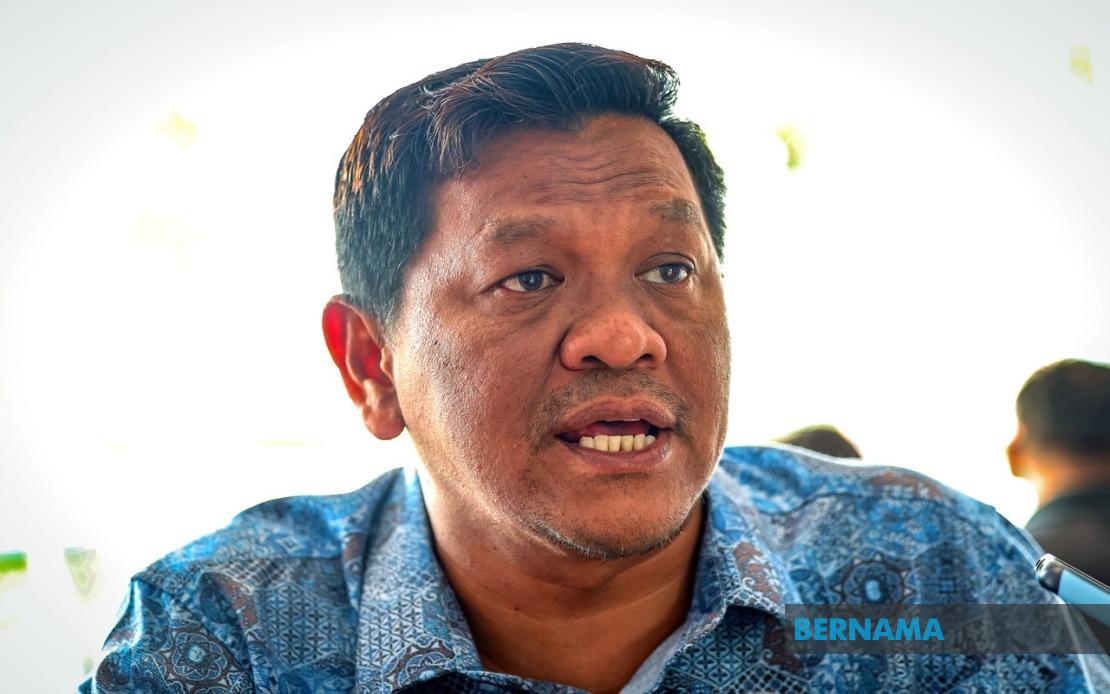
Abdullah Izhar Mohamed Yusof, political secretary to the Communications Minister, framed the voucher scheme as evidence of the government's commitment to addressing the everyday hardships facing ordinary citizens while simultaneously nurturing social cohesion. His remarks underscore an emerging pattern in Malaysian governance whereby direct cash assistance programmes are being deployed as tools for both welfare provision and political engagement at the grassroots level. The emphasis on strengthening "the spirit of unity" suggests that such initiatives carry symbolic weight beyond their immediate economic impact, functioning as visible demonstrations of state responsiveness to citizen needs.
What distinguishes this programme from standard welfare distribution is its integrated approach to civic engagement. Rather than treating fuel vouchers as a standalone relief measure, the National Security Council paired the handout with structured briefings on government policies and facilitated community dialogue. This design reflects a deliberate strategy to couple material support with information dissemination and feedback collection, creating a multi-functional outreach mechanism that addresses immediate financial strain whilst simultaneously serving communication and intelligence-gathering objectives. Representatives from the Information Department and the Department of Community Communications participated alongside MKN officials, indicating coordinated effort across multiple government agencies.
Abdullah Izhar indicated that such programmes would become recurring features of the government's engagement strategy, not one-off gestures. The commitment to regular iterations suggests scaling ambitions, with the political secretary emphasizing that nationwide expansion would ensure equitable access across diverse demographic segments. For motorcyclists—a substantial proportion of Malaysia's working population who depend on two-wheeled transport for income-generation and daily mobility—fuel costs represent a significant variable expense. In a country where petrol prices fluctuate and transport subsidies remain politically contentious, even modest vouchers can provide meaningful temporary relief, particularly for those operating motorcycles as commercial vehicles or relying on fuel efficiency for livelihood sustainability.
The programme's emphasis on "accurate and authentic information" warrants closer examination within Malaysia's contemporary media landscape, where misinformation and competing narratives frequently shape public discourse. By positioning government outreach as a corrective mechanism against false information, officials frame state communication as a public service addressing a genuine citizen vulnerability. This rhetorical move positions the National Security Council not merely as a security apparatus but as an information authority tasked with calibrating what constitutes legitimate knowledge in the eyes of rural and grassroots communities.
Recipient M. Raja, a 56-year-old father of five from Taman Sri Jaya, articulated gratitude tempered by modest aspiration. His comment that monthly iterations would be preferable yet his acceptance of the single voucher reflects the economic precarity of lower-income household management. For individuals supporting large families on limited incomes, even RM5 translates into concrete value—sufficient for a few litres of fuel or equivalent purchasing power redirected toward other essential expenses. The humility evident in Raja's response suggests both appreciation and an unspoken acknowledgment that tokenistic assistance, while welcome, cannot fundamentally restructure economic inequality.
Similarly, Hee Eeck Kwe, a 66-year-old from Kampung Baru, emphasized the symbolic significance of being included in government assistance initiatives. His comment that rural communities were "not left out" indicates that beneficiaries perceive such programmes partly through a lens of political inclusion and recognition. Elderly motorcyclists operating in rural settings face particular vulnerabilities—lower incomes, limited access to formal financial services, and reduced mobility compared to younger counterparts. By specifically targeting this demographic, the government acknowledges their structural position within Malaysian society whilst simultaneously creating opportunities for positive engagement with state institutions.
The geographic focus on Kluang and surrounding areas in Johor carries regional implications. Johor, as Malaysia's second-largest state by population and a crucial economic contributor, has witnessed intensifying political competition between ruling coalitions and opposition movements. Grassroots assistance programmes in this state assume heightened political salience, functioning as visible markers of governmental legitimacy and performance. For a National Security Council initiative to prioritize such engagement suggests recognition that social stability and political legitimacy increasingly depend upon demonstrable state capacity to address citizen welfare.
The programme's integration of World Cup-themed branding in its nomenclature—Jiwa@Komuniti MADANI Sembang Santai World Cup Edition—reveals how government agencies strategically weaponize entertainment and sporting events to amplify community engagement messaging. By anchoring bureaucratic outreach to globally resonant cultural moments, officials enhance programme appeal and accessibility whilst subtly positioning government participation within broader narratives of national pride and international relevance. For communities where global sporting events command significant attention, such framing potentially increases receptivity to accompanying policy communications.
Looking forward, the stated intention to expand such programmes nationwide raises questions about resource allocation, sustainability, and measurable outcomes. Distributing RM5 vouchers across Malaysia's entire motorcyclist population would require substantial budgetary commitment. Whether the National Security Council possesses adequate funding, administrative infrastructure, and genuine capacity to deliver promised nationwide expansion remains ambiguous. Scepticism regarding implementation feasibility should not obscure the genuine relief provided to initial beneficiaries, yet observers should monitor whether rhetoric translates into sustained programmatic delivery.
For Malaysian policymakers and development professionals, this initiative illustrates contemporary approaches to combining welfare provision with political engagement and information management. Rather than separating economic assistance from civic communication, integrated outreach strategies treat these dimensions as complementary objectives. Whether such programmes effectively reduce economic vulnerability, build state legitimacy, counter misinformation, or primarily serve electoral positioning remains subject to rigorous evaluation. Yet their proliferation across Malaysian governance reflects fundamental shifts in how state institutions engage with ordinary citizens, particularly in rural and working-class communities where motorcycles represent primary transport infrastructure and political allegiances remain contested terrain.

