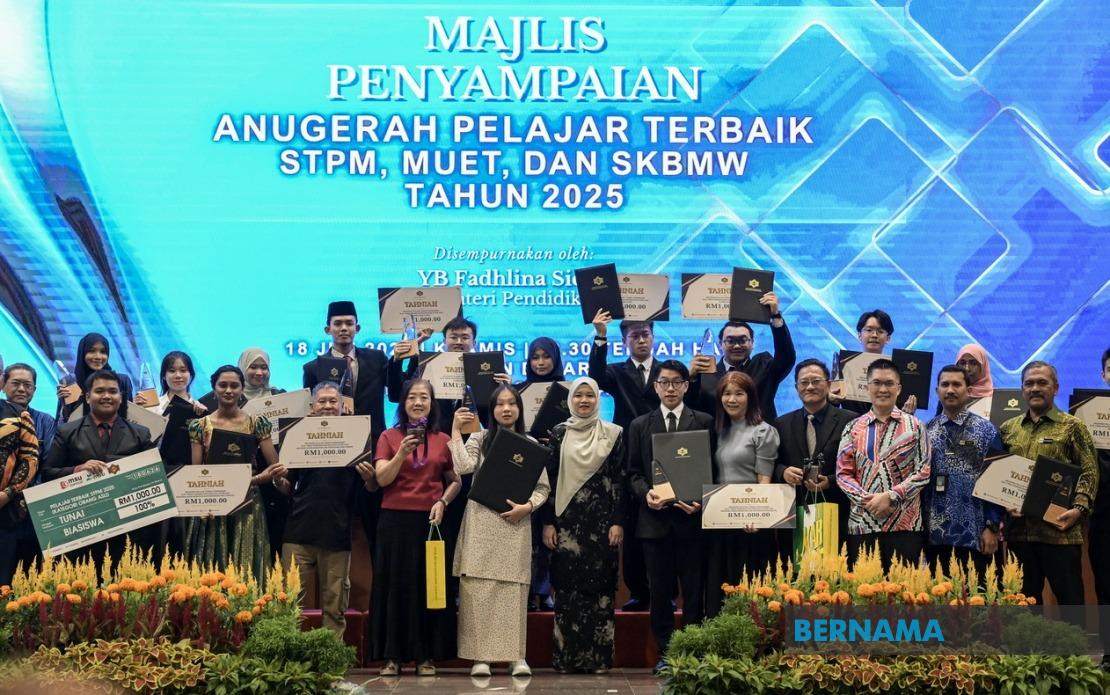
Malaysia's public universities are launching a new scholarship initiative targeting the nation's top-performing STPM students, with 18 recipients from the 2025 cohort set to benefit from fully-sponsored bachelor's degree programmes. Education Minister Fadhlina Sidek announced the scheme at a ceremony honouring exceptional achievers across multiple examination categories, signalling the government's deepening commitment to elevating Malaysia's pre-university education pathway and making it more attractive to high-performing secondary school graduates.
The tuition sponsorship programme represents a strategic pivot in how Malaysia supports academic excellence at the Form Six level. By embedding scholarship opportunities directly into the university system rather than handling them through centralised government channels, the initiative creates stronger incentives for top students to pursue the traditional STPM route rather than international qualifications or alternative pathways. This decentralised approach also allows individual public universities to compete for the brightest minds, potentially improving institutional quality and reputation across the sector.
Fadhlina underscored that the scholarships constitute merely one component of a comprehensive ecosystem-strengthening strategy that extends well beyond financial support. The government has simultaneously expanded the physical infrastructure for Form Six education by establishing additional dedicated colleges, integrated technological learning through smartboard installations in classrooms, and provided targeted financial assistance to students from lower-income backgrounds. The MADANI Book Voucher scheme, designed to subsidise educational materials, further reduces barriers to participation for disadvantaged learners who might otherwise be unable to afford necessary resources.
The timing of this announcement reflects broader demographic and policy considerations. Malaysia has long struggled with declining STPM enrolment as parents increasingly opt for international baccalaureate programmes, foundation studies, or diploma routes. By making the conventional pre-university pathway more rewarding for high achievers, the government aims to reverse this trend and restore prestige to a qualification that has historically served as the primary gateway to local university admission. International competition for top talent has intensified, making domestic incentives increasingly necessary.
Data released simultaneously with the scholarship announcement revealed encouraging signs in overall STPM performance metrics. The national Cumulative Grade Point Average rose marginally to 2.88 from the previous year's 2.85, a modest but meaningful improvement that ministry officials attributed partly to enhanced support structures already implemented. While the percentage-point gain may appear small, it reflects positive momentum across thousands of students nationwide and suggests that policy interventions are beginning to yield measurable results in educational attainment.
The improvement in aggregate performance carries particular significance for Malaysia's longer-term competitiveness. Higher average qualification standards among pre-university students translate directly into stronger university cohorts, which subsequently affects graduate employability and contribution to the knowledge economy. For multinational companies evaluating Malaysia's talent pipeline, these metrics matter considerably when deciding whether to establish research or innovation hubs locally. By demonstrating commitment to quality improvement, the government strengthens its pitch to knowledge-intensive industries.
For Malaysian parents and students contemplating post-secondary education decisions, the scholarship programme adds a compelling dimension to STPM pathway deliberation. Previously, the financial advantage lay primarily with international qualifications or private institution routes, where families with resources could access programmes with global recognition. This new initiative narrows that gap by ensuring that the most academically talented students from any economic background can access high-quality tertiary education through Malaysia's public university system without incurring fees. This democratisation of access to premium education addresses longstanding concerns about equity in educational opportunity.
The involvement of all public universities in the scheme, as mentioned by Fadhlina, indicates coordinated system-wide commitment rather than piecemeal efforts by individual institutions. Coordination at this scale suggests government leverage and priority-setting, likely involving formal engagement with university leadership to define selection criteria, funding mechanisms, and integration with existing scholarship portfolios. The inclusive participation also prevents a scenario where only elite universities benefit from premium talent, instead distributing high-achieving graduates across the public higher education network and potentially elevating overall sector quality.
Contextually, this development arrives as Malaysia navigates post-pandemic educational recovery and positioning itself within competitive regional education markets. Singapore, South Korea, and China have long emphasised merit-based scholarship systems to attract and cultivate talent. Malaysia's expansion of similar incentives signals aspirations to align with regional best practices while demonstrating to domestic constituents that academic excellence will be rewarded and supported. For Southeast Asian students considering tertiary options across the region, the enhanced Malaysian scholarship landscape becomes more compelling.
The ceremony where these announcements were made also honoured exceptional performance in the University of Malaysia English Test and the Certificate of Proficiency in Malay for Foreigners. This multi-platform recognition highlights the Ministry's systematic approach to celebrating and incentivising achievement across different educational domains and learner profiles. The inclusion of international language proficiency certifications acknowledges Malaysia's positioning as an English-language regional hub and its attractiveness to foreign students seeking tertiary qualifications.
Moving forward, the success of this initiative will likely depend on how effectively universities market the opportunities to prospective STPM students and whether the scholarships genuinely remove financial barriers for deserving but economically disadvantaged high achievers. Monitoring systems should track whether scholarship recipients reflect Malaysia's demographic diversity or whether access remains concentrated among certain privileged groups. Additionally, examining graduate outcomes and career trajectories of scholarship recipients will provide crucial evidence about whether the investment translates into meaningful economic and social returns.